Quick Summary: Driving in Albania is safe and rewarding, main roads are in good shape, fuel is cheap, and there are no tolls. The biggest adjustment is the driving culture: expect aggressive overtaking, creative lane use, and very few traffic lights outside Tirana. Come prepared, drive defensively, and you'll be fine.
Albania is one of the best countries in Europe to explore by car. The distances are short, the scenery is incredible, and many of the best places, mountain villages, hidden beaches, UNESCO towns, aren't reachable by public transport.
But driving here is different from what you might be used to in Western Europe. The roads are improving fast, but the driving culture takes some getting used to. This guide covers everything you need to know before you get behind the wheel: road conditions, traffic rules, fuel, parking, and the mistakes most tourists make.
Wondering if it's safe? We've covered that in detail in our guide to driving safety in Albania, short answer: yes, but keep reading for the practical stuff.
Is It Safe to Drive in Albania?
Yes, driving in Albania is safe for tourists. Main roads and highways are modern and well maintained, and most accidents involve local drivers rather than visitors. The two things to adjust to are assertive local driving habits and narrower mountain roads, where you slow down and drive with more caution. Tirana is the most stressful place to drive because of heavy traffic and limited parking. Outside the capital, it gets easier fast.
Road Conditions
Albania's road network has improved dramatically in the last few years. New highways, tunnels, and resurfaced roads have made getting around much easier than it was even five years ago.
Highways and main roads connecting Tirana, Durrës, Berat, and Vlora are in good shape, well-paved, clearly marked, and comfortable to drive. The A2 motorway from Tirana to Fier is a fast, modern dual carriageway. The newer sections of the A1 heading north toward Kukës include a mountain tunnel that cuts 40 minutes off the old route.
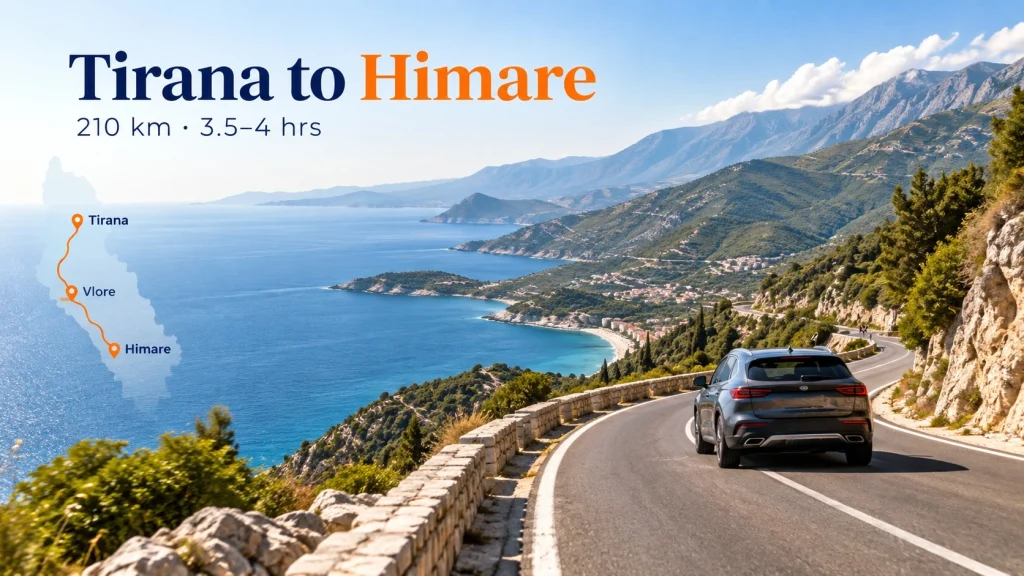
Coastal roads along the Albanian Riviera are paved but winding. The stretch from Vlora over the Llogara Pass and down to Saranda is one of the most scenic drives in the Balkans, but it's full of hairpin turns and steep drops. Take your time, especially if you're not used to mountain driving.
Mountain roads in northern Albania, particularly the routes to Theth and Valbona, are a different story. Expect unpaved sections, potholes, rockslides, and roads barely wide enough for two cars. A 4x4 or SUV is strongly recommended for anything north of Shkodër. For a detailed breakdown of what to expect, read our guide to driving to Theth National Park. One more thing for mountain and rural routes: animals on the road are a real hazard. Sheep, goats, cows, and dogs cross freely, sometimes around blind corners. Slow down significantly on any unfenced rural road, especially at dawn and dusk.
A general rule: Google Maps drive times are fairly accurate for highways and main roads, but optimistic for mountain routes. Add 30–50% extra time for anything involving unpaved or winding roads.
Speed Limits and Traffic Rules
Speed limits in Albania are straightforward:
- Cities and towns: 40 km/h
- Rural roads: 80 km/h
- Highways: 110 km/h
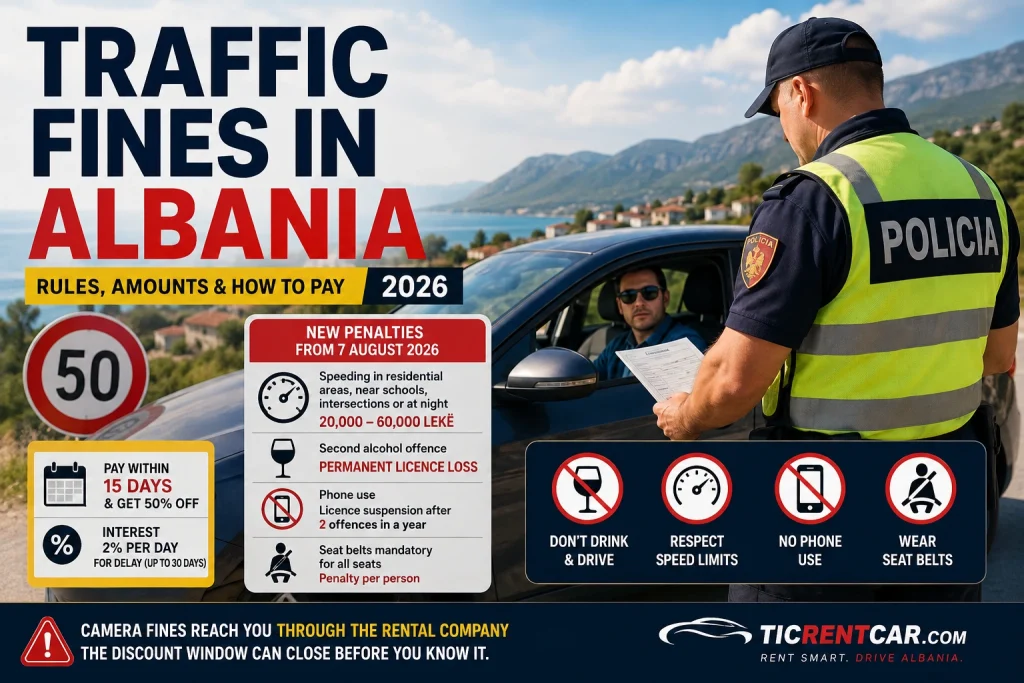
These are enforced, and police checkpoints are common, especially on the outskirts of cities and along major highways. Fines are issued on the spot and can range from 2,000 to 10,000 ALL (roughly €18–90) depending on the violation.
Other rules to know:
- Seatbelts are mandatory for all passengers, front and back.
- Headlights must be on at all times, even during the day. This catches a lot of tourists off guard.
- Phone use while driving is prohibited unless you're using a hands-free setup.
- Blood alcohol limit is 0.01%, essentially zero tolerance. Don't drink and drive, period.
- Right-hand traffic. Albania drives on the right side of the road. If you're coming from the UK, take extra care at roundabouts and intersections.
Always carry your driving license, passport, and rental documents in the car. Police may ask for them at checkpoints.
Albanian Driving Culture: What to Expect
The rules above are official. Here's the reality on the road.
Overtaking happens constantly, on bends, on narrow roads, on hills. Albanian drivers overtake whenever they feel they can make it. Your job is to stay predictable and not react aggressively. If someone overtakes you dangerously, let them go.
Honking is not rude, it's communication. A quick beep when overtaking means "I'm coming through." A flash of headlights usually means "I'm not stopping" rather than "go ahead." Don't read aggression into it.
Lane discipline is loose, especially in Tirana. Two-lane roads regularly become three lanes of moving traffic. In roundabouts, expect drivers to enter from any position and exit from the wrong lane. Watch what's actually happening, not what the road markings say should happen.
Indicators are used inconsistently. Don't assume a driver isn't turning just because they haven't signaled. Keep a safe following distance and stay aware of vehicles on both sides.
Stopping suddenly is common, to talk to someone on the street, pick up passengers, or buy something from a roadside vendor. In cities especially, the car in front of you can brake without warning. Give extra space.
The best approach: drive defensively, stay calm, and don't try to enforce the rules of the road through your driving. Albania has its own rhythm, once you adjust to it, it's manageable.
Do You Need an International Driving License?
This depends on where your license was issued.
If your driving license is printed in the Latin alphabet (English, French, German, Spanish, Italian, etc.), your regular license is accepted in Albania. No additional documents needed.
If your license uses a non-Latin script (Cyrillic, Arabic, Chinese, Japanese, Korean, etc.), you'll need an International Driving Permit (IDP). You must get this in your home country before traveling; you can't get one in Albania.
The IDP is only valid alongside your original license, so bring both.
For more on entry requirements, see our full guide on what you need to travel to Albania. And if you're unsure whether your license works here, check out can visitors drive in Albania?
Road safety is one thing; the rental process is another. If you're weighing deposits, insurance and avoiding rental scams, see our guide on whether it's safe to rent a car in Albania.
Fuel Stations and Prices
Fuel is widely available along main roads and in cities. You'll find stations from international brands and local operators throughout the country. Most offer both petrol (benzinë) and diesel (naftë), and some have LPG as well.
A few things to keep in mind:
Prices fluctuate, but fuel in Albania is generally cheaper than in Western Europe. Check current prices when you arrive, they're usually posted on signs at every station.
Card payments are accepted at most stations in Tirana, Durrës, Vlora, and other cities. However, rural stations and those in smaller towns often accept cash only, carry some Albanian Lek (ALL) just in case.
Fill up before heading to remote areas. If you're driving to Theth, Valbona, the Korçë region, or through the mountains between Përmet and Leskovik, fuel stations become scarce. Top off your tank whenever you see one.
Parking Tips
Parking in Albania is generally easy and cheap compared to most European countries.
In smaller towns, parking is usually free and informal, just find a spot on the street. In Tirana, paid parking is the norm in the center. Rates run around 100–200 ALL per hour (less than €2). Use official parking lots and garages to avoid tickets. We've mapped out the best options in our Tirana parking guide.
In beach towns during summer (June–September), expect paid parking near popular beaches. Ksamil, Dhermi, and Saranda charge around 100–200 ALL per day at beach parking areas. Arrive early in peak season — lots fill up fast.
One more tip: don't leave valuables visible in the car. Albania is generally safe, but opportunistic theft from parked cars happens in tourist areas, just like anywhere else.
Tolls
Good news, Albania has almost no tolls. You can drive across the entire country without paying a single toll fee on most routes.
The one exception is the Rruga e Kombit tunnel on the A1 motorway between Tirana and Kukës (the road toward Kosovo). The toll is modest, just a few hundred lek.
Albania doesn't use a vignette system like some neighboring countries (Serbia, North Macedonia), so there's nothing to buy in advance.
What Car Should You Rent?
The right car depends on where you're going:
City trips and southern Albania, an economy or compact car is perfectly fine. Roads between Tirana, Berat, Gjirokastra, and the coast are all paved and manageable in any car, including popular day trips like the drive to the Blue Eye spring. You'll save money on fuel and have an easier time parking. The drive from Tirana to Berat is a good example, motorway for most of it with no mountain sections.
Albanian Riviera, a compact or midsize car works well. The coastal roads are paved, but some beach access roads are steep and narrow. Nothing that requires a 4x4, but a car with a bit more power helps on the hills.
Northern Albania and mountains: an SUV or 4x4 is strongly recommended. The roads to Theth and Valbona include unpaved sections, steep climbs, and river crossings in some spots. A small car will struggle and could get damaged. Read more about the advantages of renting an SUV.
Automatic vs manual: Most rental cars in Albania are manual transmission. Automatics are available but limited, if you need one, book early.
Common Mistakes Tourists Make
After hearing from countless tourists, these are the mistakes that come up again and again:
- Underestimating drive times. A route that Google says takes 3 hours might take 4.5 in reality, especially on mountain or coastal roads. The Llogara Pass alone takes longer than the map suggests because of the switchbacks. Build in buffer time.
- Not carrying cash. Some fuel stations, most beach parking lots, and many small restaurants outside major cities are cash-only. Have at least 5,000–10,000 ALL on you at all times.
- Driving in Tirana during rush hour. Traffic in Tirana between 7:00–9:30 AM and 4:00–6:30 PM can be brutal, six lanes squeezing into two, aggressive merging, and barely any traffic lights outside the center. If you can, avoid driving in the capital during these hours. Read our tips on how to handle Tirana traffic.
- Skipping offline maps. Mobile data works well in most of Albania, but coverage drops in mountain areas and remote valleys. Download the Albania map in Google Maps before you leave your hotel — it could save you from getting lost on a mountain road with no signal.
- Not checking the car before driving off. This applies everywhere, but especially in Albania: walk around the car, photograph any existing damage, and make sure lights, wipers, and tires are in good condition. It takes two minutes and can save you a dispute later.
- Avoid driving at night on rural or mountain roads. Street lighting outside major cities is minimal or nonexistent. Unlit vehicles, unmarked roadworks, potholes, and animals on the road all become serious hazards after dark. If you need to get somewhere remote, plan to arrive before sunset.
FAQ
No. Main roads are well-maintained and driving is straightforward. Mountain roads require more attention, and other drivers can be unpredictable in cities, but overall it's safe for anyone with basic driving experience.
Yes. You need a valid driving license (Latin alphabet) or an International Driving Permit if your license uses a non-Latin script. There's no special permit required for tourists.
Only if you're heading to northern Albania, specifically Theth, Valbona, or other remote mountain areas. For the rest of the country, including the Albanian Riviera and all UNESCO towns, a regular car is fine.
Main highways and roads between major cities are in good condition and improving every year. Rural and mountain roads vary, some are excellent, others are rough. Check road conditions for your specific route before you go.
Emergency Numbers in Albania
- Police: 129
- Emergency (ambulance/fire): 112
- Road assistance: 126
Save these before you drive. Mobile coverage is good on main roads but drops in mountain areas — if you need help in a remote area, try to reach higher ground for signal.
Key Takeaways
- Main roads and highways are in good condition, rural and mountain roads vary significantly
- Speed limits are enforced with on-the-spot fines; headlights must be on at all times
- Albanian driving culture is aggressive by Western standards, stay defensive and calm
- Avoid driving at night outside cities; watch for animals on rural roads
- No tolls across most of Albania; fuel is cheaper than Western Europe
- You only need an IDP if your license uses a non-Latin script
Ready to explore Albania by car?
Free delivery to Tirana Airport. No credit card required.